Vision Board
Do Vision Boards Work? The Research and My Own Results
Do vision boards work? What the studies actually measured, two famous numbers that don't hold up, my own count (12 of 22 wishes came true) and a free scorecard for reviewing your own board.
On this page
Do vision boards work? I've made them since I was a teenager, and since 2022 I've made them in VISIYA, the app I build. My honest answer: a board doesn't make anything happen. Used as a reminder of what I said I wanted, it helps me every year.
So instead of testimonials from strangers, here are my own numbers, what the studies actually measured and a scorecard you can use on your own board.
Do vision boards work? The short answer
Not by themselves. A vision board is a reminder. The useful part is what sits next to each picture: the obstacle, a first step and a set time to look at it again.
- Daydreaming about an ideal outcome, and nothing else, left people with less energy in lab experiments.
- A goal plus the obstacle plus an if-then plan has support from many studies, with small to medium effects.
- Nobody has tested vision boards themselves in a controlled study. Everything you read about the "science of vision boards" is about the parts.
What does the research actually show?
There's no controlled study of vision boards. There is good research on what a board is made of: picturing the future, naming what's in the way, and planning. Much of it comes from Gabriele Oettingen, a psychologist at New York University and the University of Hamburg.
| Study | What it found | What it doesn't show |
|---|---|---|
| Oettingen & Mayer, 2002 | Four studies: college graduates looking for jobs, students with a crush, students facing an exam and patients getting a hip replacement. People who expected to succeed put in more effort and did better. Rosy daydreams went the other way: the graduates who fantasized most about a dream job sent fewer applications, got fewer offers and earned less about two years later. | It's a correlation, not proof of cause: the daydreams were measured, not assigned. And optimism isn't the problem. Expecting to succeed went with better results. |
| Kappes & Oettingen, 2011 | Four experiments. People asked to imagine an idealized future had less energy afterward, measured partly by blood pressure, than people whose fantasies questioned that future, were negative or were neutral. | Short lab sessions. They measured energy right afterward, not whether anyone reached a goal. |
| Pham & Taylor, 1999 | College students who spent five to seven days before a midterm picturing when, where and how they would study did more studying and got better grades. Picturing only the good grade didn't help. | One study, one exam. No vision boards were involved. |
| Wang, Wang & Gai, 2021 | A meta-analysis of 21 studies with about 15,900 people. Mental contrasting (picturing the goal, then the obstacle) plus an if-then plan helped people reach their goals. The effect was small to medium, and bigger when a person guided it than when it was done on paper. | The authors found signs that mostly positive results got published, so the true effect may be smaller. No vision boards were involved. |
| Gollwitzer & Sheeran, 2006; Sheeran, Listrom & Gollwitzer, 2025 | If-then plans help. Across 94 tests the effect was medium to large; the newer review of 642 tests found small to medium effects. Plans worked best when written as a real "If…, then…", when motivation was high and when people practiced the plan. | The newer, bigger review found smaller effects than the older one. They tested plans, not boards. |
Kappes and Oettingen's own explanation: imagining the dream feels a little like you've already gotten there. If they're right, the pretty picture on its own is the risky part of a vision board. Give every picture its obstacle and an if-then plan.
Oettingen turned this into a four-step method called WOOP: Wish, Outcome, Obstacle, Plan. I explain it briefly in what is a vision board.
What's not true about vision boards?
A few claims show up in almost every article about vision boards. None of them holds up the way they're usually told.
-
The Harvard (or Yale) goals study. Supposedly, the 3 percent of a graduating class who had written goals went on to earn more than the other 97 percent combined. That study doesn't exist. Harvard Library calls it an urban legend, and Yale's librarians found nothing either.
-
"You're 42% more likely to reach your goals if you write them down." This comes from a small study by Gail Matthews at Dominican University of California, presented at a psychology conference in 2007 and never published in a journal (her summary, PDF). Of 267 people who signed up, 149 finished the four weeks, and everyone rated their own progress.
The 42% is the ratio between two average scores (6.08 and 4.28), not a chance of success. The group that did best sent a friend a progress report every week, so the strongest result is about checking in with someone, not about writing goals down.
-
"A vision board rewires your brain" or switches on your "reticular activating system." It sounds like neuroscience. No study has tied vision boards to it.
-
Superstitions dressed up as rules. "If the car in your picture has a scratch, you'll get a scratched car." "Never start on a waning moon." If you like starting on a new moon, go ahead; the moon phase calendar shows you when the next one is. None of it is a rule.
Wondering whether believing in manifesting helps or hurts? There's a study on that too, and I cover it in my money vision board post.
My results: how many wishes came true?
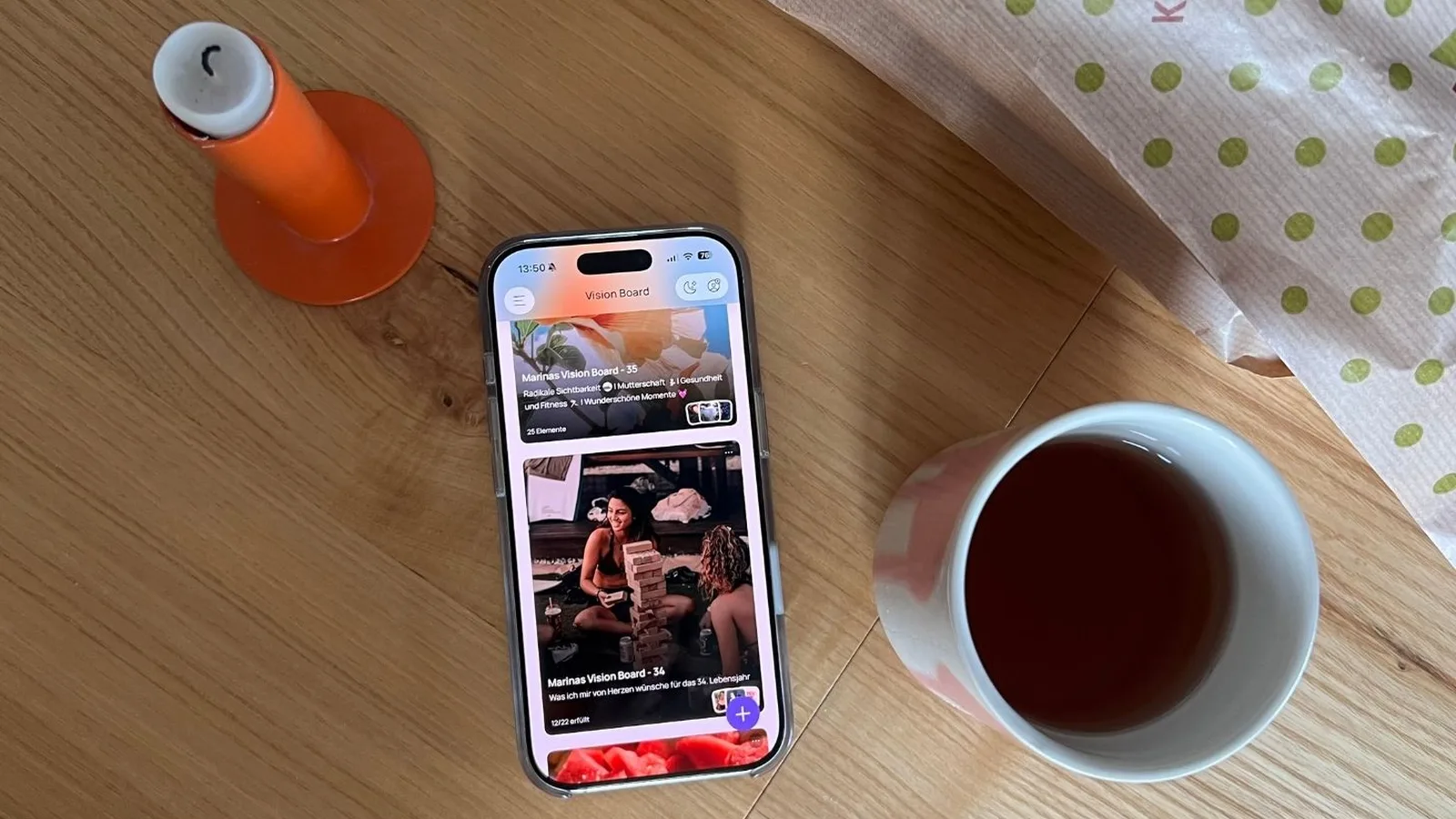
About half. On the board I made for my 34th birthday, 12 of 22 wishes are marked fulfilled in VISIYA.
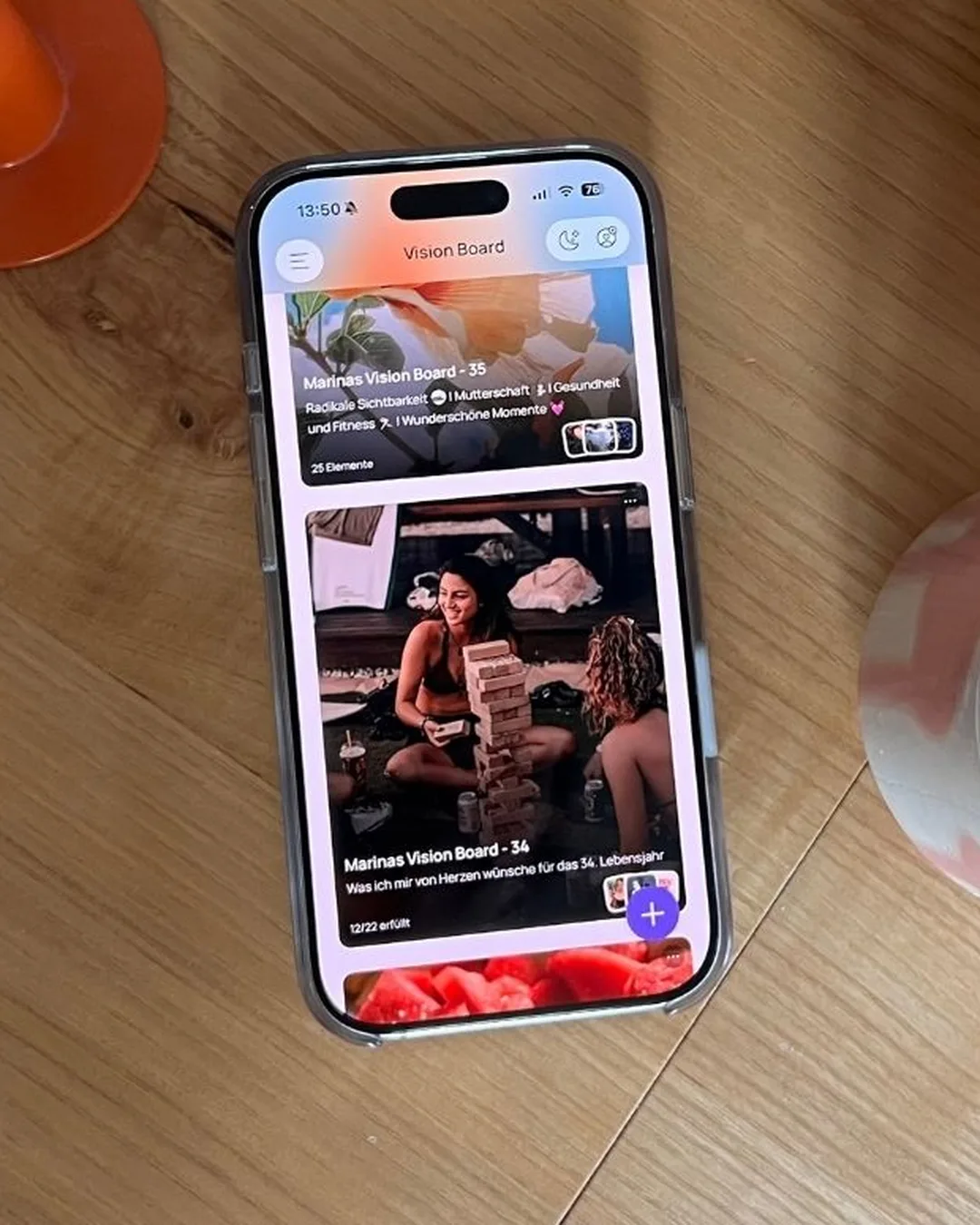
Every year around my birthday, I take stock and start a new board, one per year of life. I go through what happened and what didn't, without beating myself up about it.
"New friendships," for example, didn't happen. The friendships I already had got deeper instead. On the scorecard below, that would be a "partly."
The universe has never delivered anything to me. I did the delivering. The board kept reminding me what I'd said I wanted.
So I expect about half. If you end the year at 22 of 22, your wishes were probably too safe.
A short list moves faster. In early July I wrote down six summer wishes, each with a picture. By the end of August, all six were checked off, including a pick-your-own flower field.

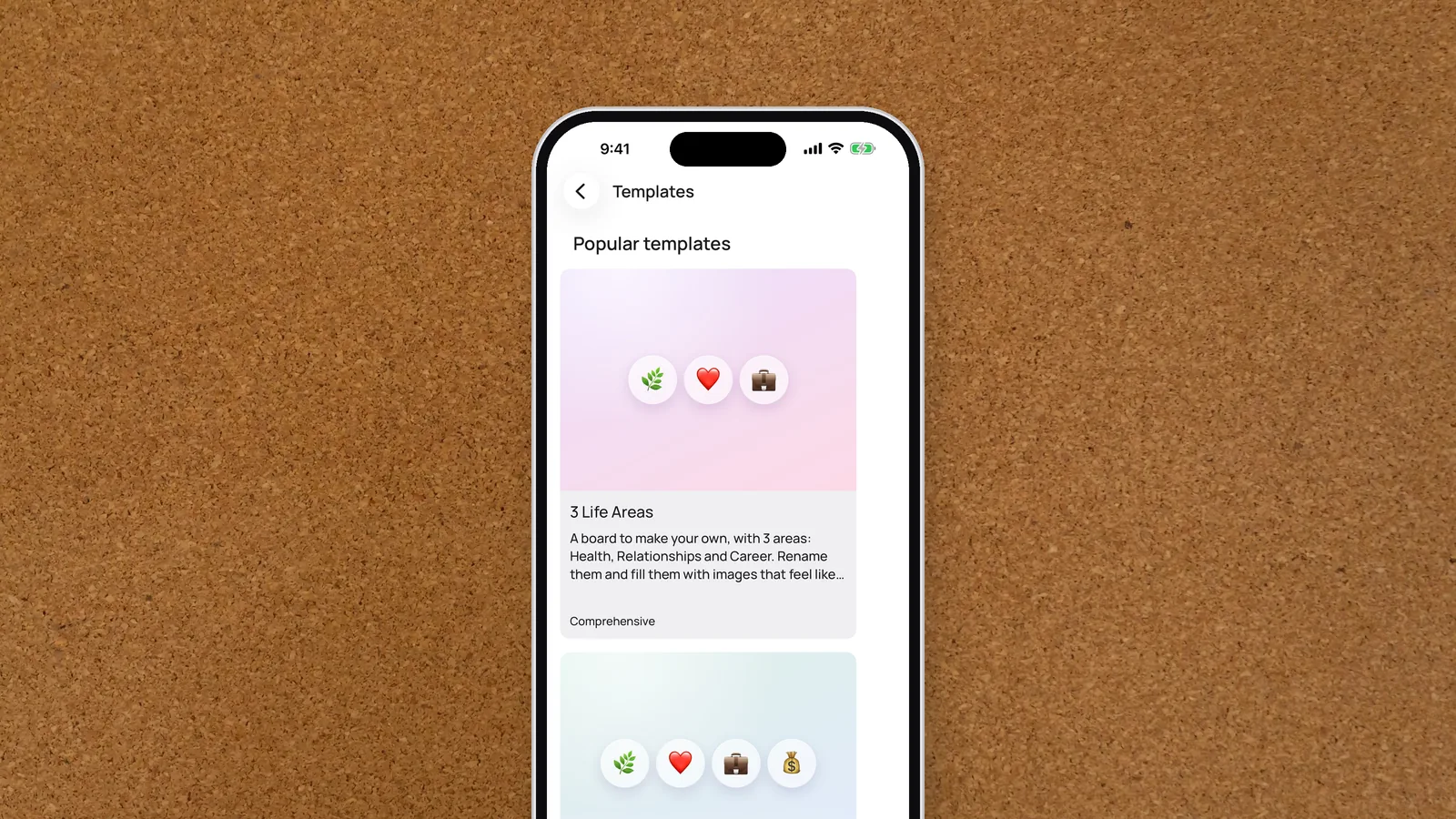
The difference from my yearly board: the list had an end date. In VISIYA, that's what the Summer Bucket List template is for (VISIYA Plus).
On Reddit and Quora, you mostly read success stories, and the people raving about their boards usually did something about their wishes too. Almost nobody posts the wishes that didn't happen. That's why I count all of them.
Why do vision boards fail?
Usually because of what's on them, and because nobody looks at them. These are the six reasons I see most. Some I know from my own boards, some from the studies above.
- The wishes aren't yours. They're your mom's, your partner's or your Instagram feed's. You won't work for those.
- Only the result is in the picture. The beach, the dream house, the dress size. Pham and Taylor found it helps more to picture the process. So put up the how: you, in running shoes, on a Saturday morning.
- Out of sight, out of mind. After a while, you stop seeing the poster on your wall. A board inside an app shows up only when you open the app. A widget or wallpaper on your home screen is in view many times a day.
- No first step. Without an "If…, then…," a wish stays a picture.
- No end date. "Someday" isn't on any calendar. My summer list had an end date, and everything on it got done.
- No review. If you never count, you never see what worked, or which wish was never really yours.
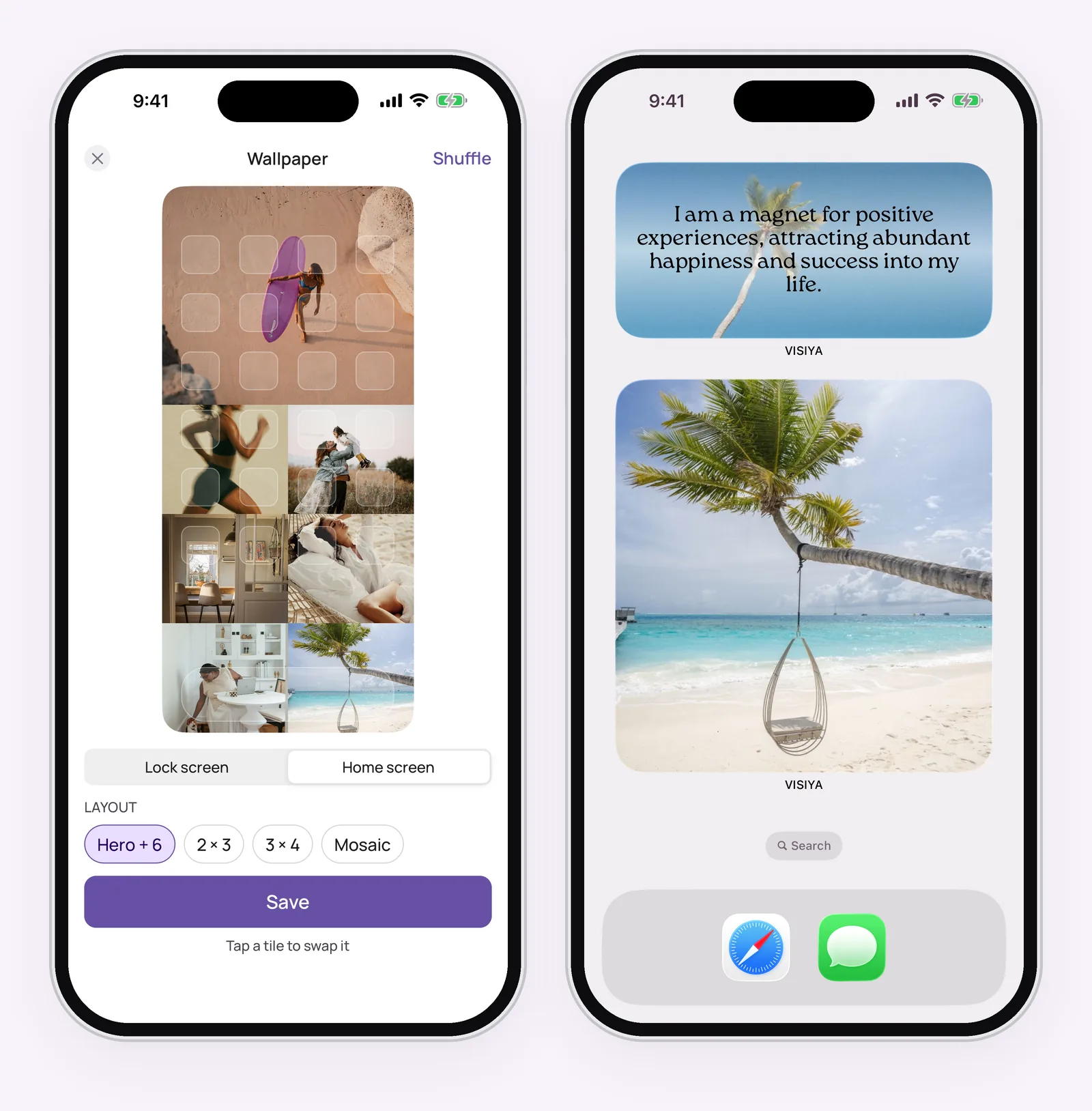
The wallpaper and the widget are part of VISIYA Plus. The widget cycles through all your pictures; without Plus, it shows just the first one.
How do you make a vision board that works?
Put fewer wishes on it, make sure they're yours, give each picture an obstacle and a plan, and keep the board somewhere you'll see it every day.
- For each wish: a picture of the process, the obstacle, a plan. For example: "If it's Sunday at 9 a.m., then I open my board and pick one step for the week."
- Leave off what you'd do anyway. Those wishes only pad the score. Same for wishes where not a single step is in your control.
- Make one small wish come true right away. Buy the book, take the walk, send the text. Why that matters is in how to activate a vision board.
- Look at it once a month and check off what happened.
- Put your next review on the calendar now.
The full walkthrough, with supplies and layout, is in how to make a vision board. The traps to skip are in common vision board mistakes.
How do you review your vision board? The scorecard
Go through your board one wish at a time and give each one of four marks. Then, for every wish that came true, ask yourself: what did I do to make it happen?
| Mark | Means | Example |
|---|---|---|
| ✓ Fulfilled | It happened | A day at the lake |
| ◐ Partly | Halfway, or not the way you pictured it | "New friendships," but the old ones got deeper |
| ○ Not yet | Still want it, so it can go on the next board | Learning Spanish |
| ✕ Let go | You don't want it anymore. That's a result too | A marathon that no longer fits your life |
Here's how:
- Copy every wish from your board, including the ones you'd forgotten.
- Give each one a ✓, ◐, ○ or ✕.
- Count: __ of __ fulfilled.
- Next to every ✓, write what you did. Next to every ○, write what got in the way.
- Answer five questions for your next board:
- Which wish surprised me?
- Which one was never really mine?
- Which area of my life went quiet?
- What did the board get me to do?
- Where will I see my next board more often?
For the quiet-area question, the free Wheel of Balance Board helps you score every part of your life.
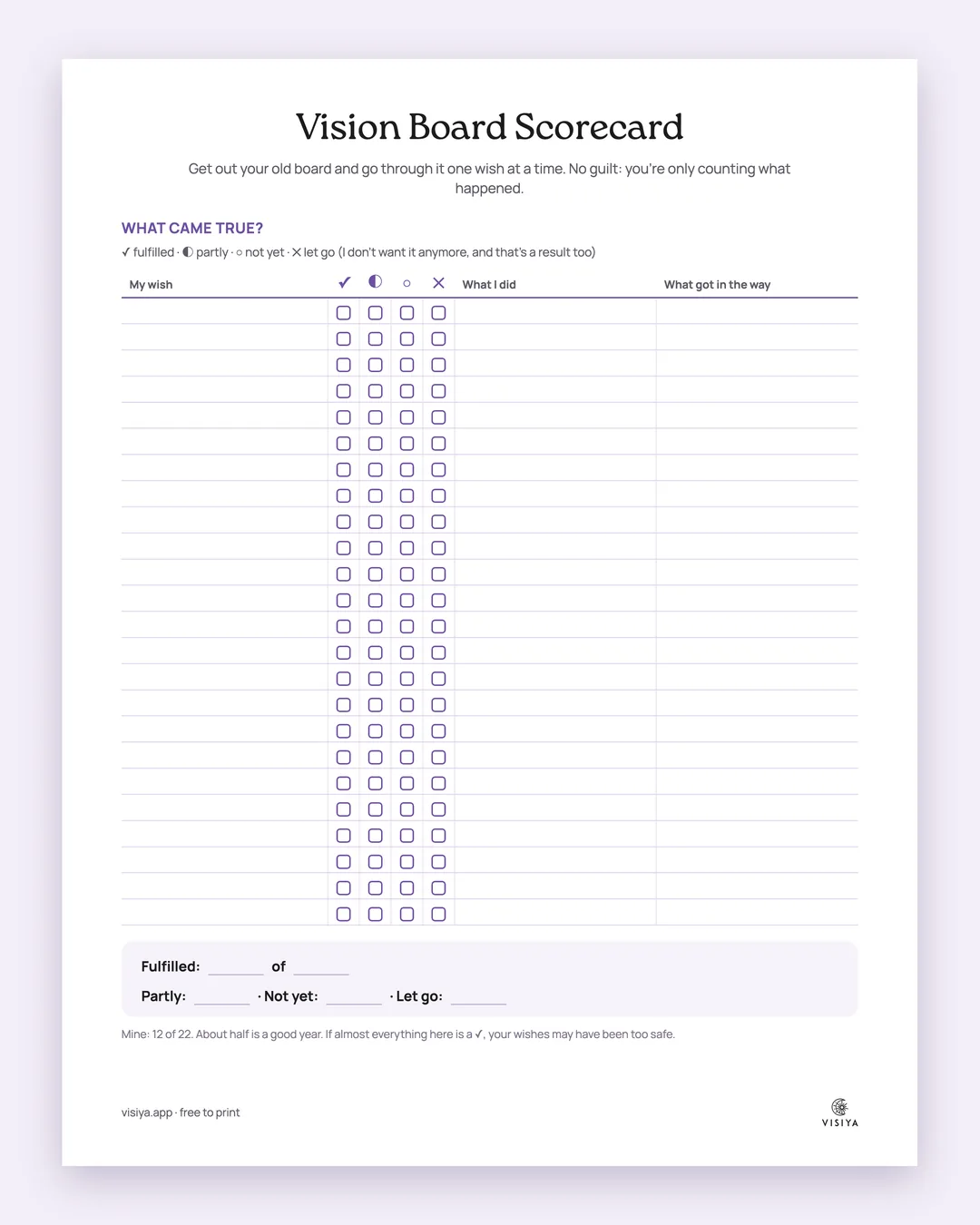
Print it: the vision board scorecard (PDF), two US Letter pages, free, no email needed. Page 2 takes you from the review to your next board, with at most a third of the old wishes to carry over and a motto for the year.
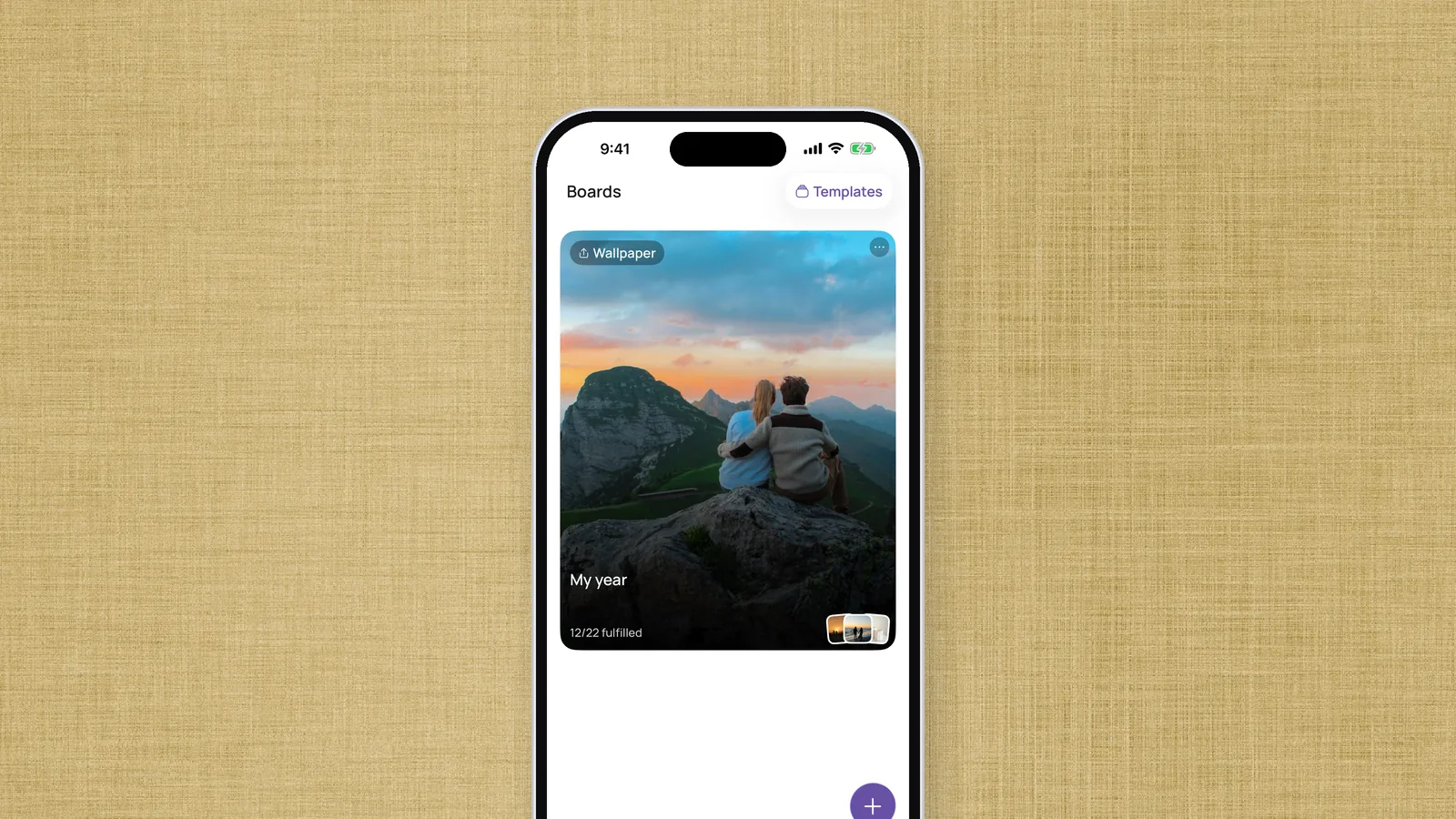
In VISIYA, when a wish comes true, tap "Mark as fulfilled." The board's card keeps count for you, like my "12/22."
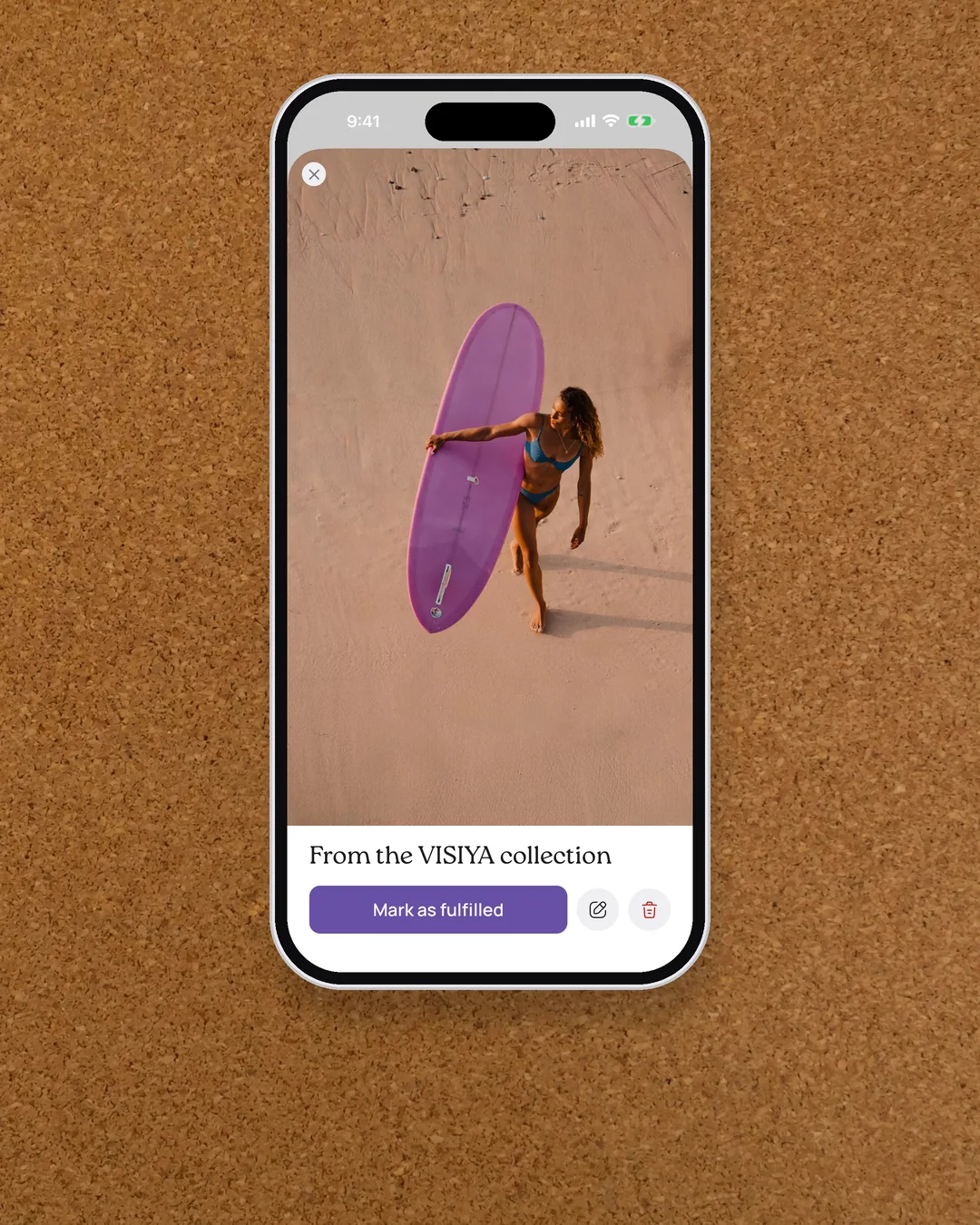
One board is free in VISIYA, on iPhone and iPad. If you want a new board every year while keeping the old ones, that's VISIYA Plus. On the free plan, just rename your board and fill it again.

 Scan to download VISIYA on the App Store
When you review is up to you: your birthday, New Year's or the end of a season. For turning the review into next year's board, with a motto, see why you should make a yearly vision board.
You don't have to believe in the universe. Just count what you did.
Frequently asked questions
Do vision boards actually work?
Not on their own. A vision board is a reminder of what you want. It can help when each picture comes with the obstacle in your way and an if-then plan, and you look at it often. On my own boards, about half the wishes come true: on the board for my 34th birthday, it was 12 of 22.
Is there scientific evidence for vision boards?
Not for the boards themselves. No controlled study has tested a vision board. What has been studied are the parts. Psychologist Gabriele Oettingen found that rosy daydreams on their own go along with less effort. If-then plans are much better studied: a review of 642 tests found small to medium effects.
Is the Harvard goals study real?
No. The story that 3 percent of a Harvard or Yale class wrote down their goals and later out-earned everyone else has never been traced to an actual study. Harvard Library calls it an urban legend, and Yale librarians found no record of it either.
How long does a vision board take to work?
I review mine once a year, around my birthday, and by then about half the wishes have usually come true. A short list with an end date moves faster: my six summer wishes were all checked off within two months.
Does a digital vision board work as well as a paper one?
No study has compared them. What I think matters most is how often you see it. On a phone, that means your lock screen or a widget on your home screen. In VISIYA, the widget and wallpaper are part of VISIYA Plus. Without Plus, the widget shows just the first picture.